
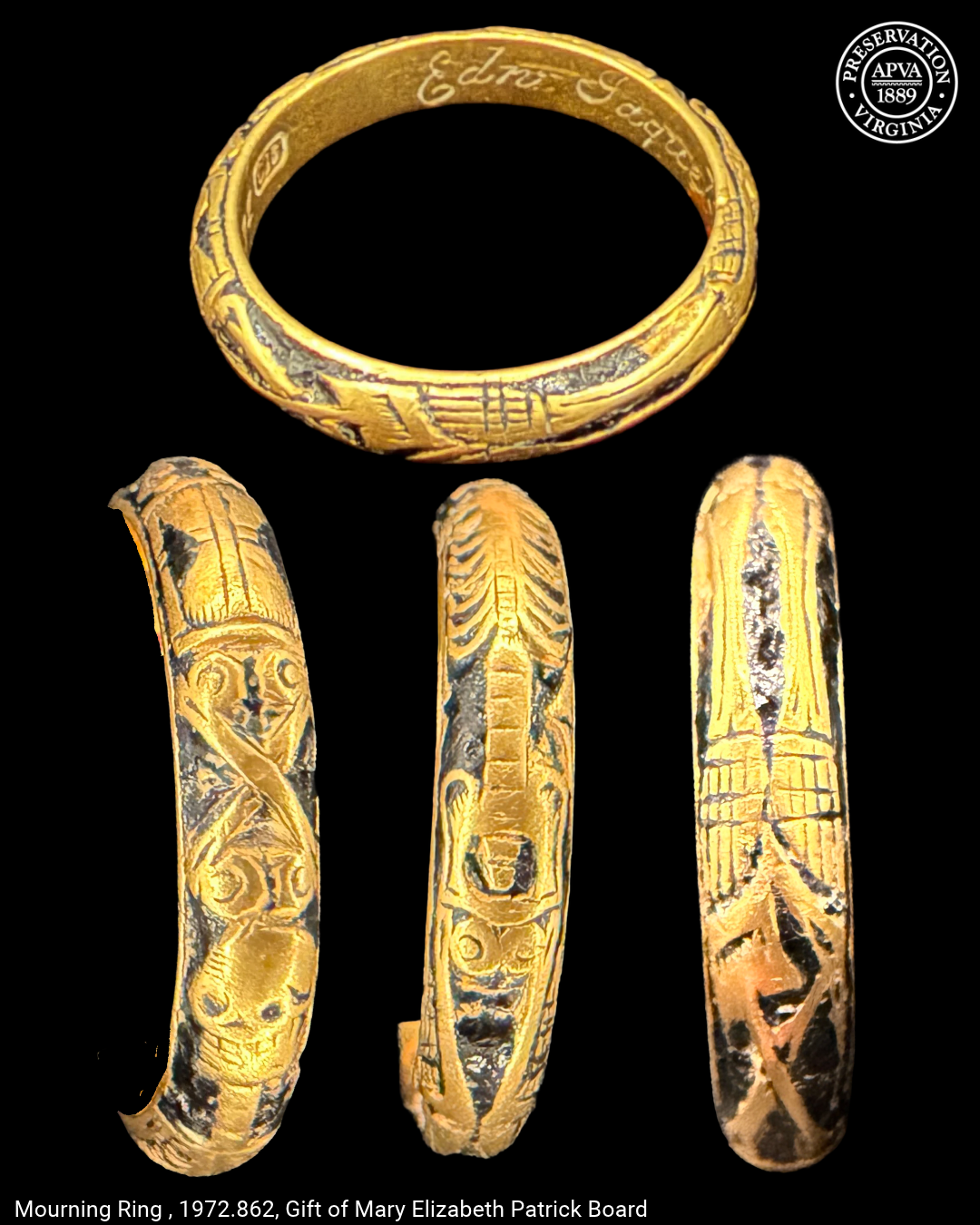
Objects are not always what they seem, and the use of an object often evolves over time. Mourning practices have similarly evolved, and can be traced through the history of a ring that commemorates the life of Edward Jaquelin (1668-1739), the great-grandfather of Mary “Polly” Ambler Marshall.
Edward Jaquelin was born in Kent, England, in 1668, and he immigrated to Virginia in 1697. His first wife was Rachel Sherwood, from whom he acquired a large plantation on Jamestown Island. After her death, he married Martha Cary. Edward and Martha had several children: Matthew, Elizabeth, Martha, Mary, and Edward. They lived in Jamestown for the rest of their lives, and Edward continued to acquire more land there. Edward and Martha died a year apart and both were buried in the Jamestown church yard. A fragment of Martha Cary Jaquelin’s (1686–1738) gravestone was excavated at the Jamestown Church in 2013 – Edward’s stone and grave have not been located.
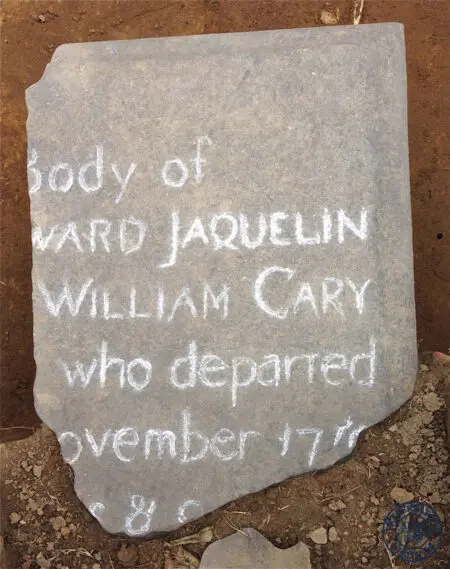
Jamestown Rediscovery/Preservation Virginia.
This ring was engraved after Edward’s death: “Edw. Jaquelin obt. 9 Nov. 1739 Aet.71.” While the 1739 date might initially indicate the ring was made in the 18th century, the style of the ring dates its origin to the 17th century. Because Edward immigrated from England to Virginia in the late 17th century it is likely had the ring in his possession already. This style of ring was popular to wear as a “memento mori,” reminding the wearer of the inevitability of death and the importance of following Christian teachings. If Edward wore the ring during his life, it seems his family transitioned it into a mourning ring when they engraved it, leaving us with a 17th century ring updated to commemorate an 18th century death.
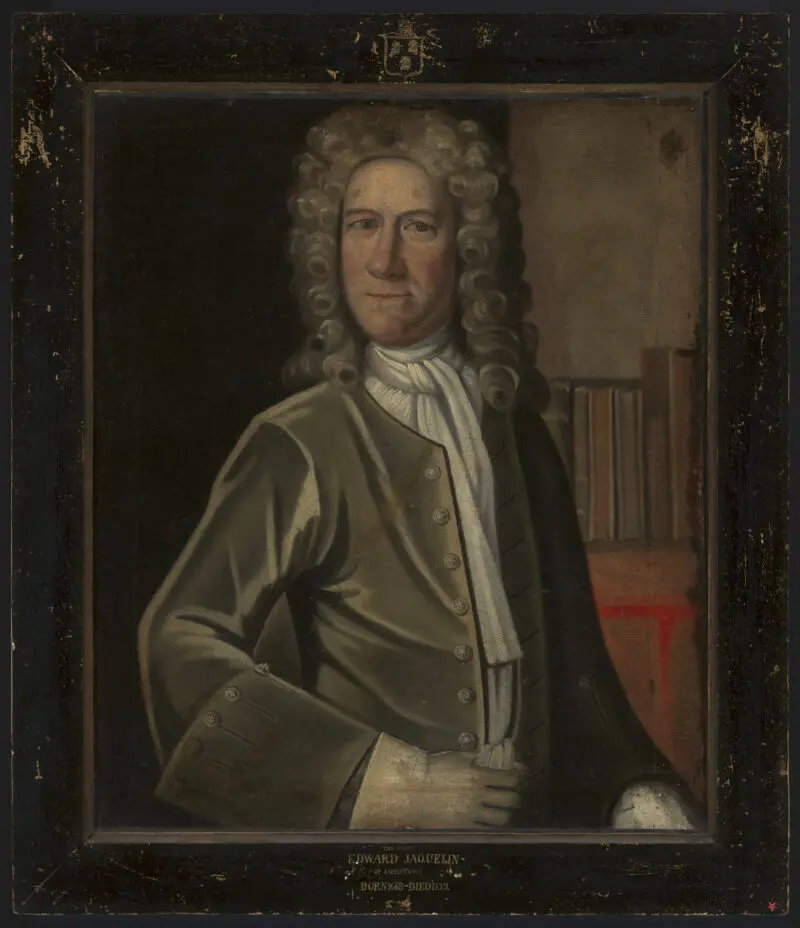
Attributed to Nehemiah Partridge (American, 1683–1730)
Oil on canvas
31½” H x 26″W
Virginia Museum of Fine Arts, Richmond. Lent by the Ambler Family, L.1.39.1
Photo: Travis Fullerton © Virginia Museum of Fine Arts
Luckily for us, a portrait of Edward exists today as a long term loan to the Virginia Museum of Fine Arts. Painted about fifteen years before Edward’s death, he is portrayed as a successful, wealthy member of the landed elite. Books placed behind him indicate he was educated, and the sheen of his waistcoat indicate a fine imported fabric. Painted by Nehemiah Partridge, a New Hampshire born artist, Edward’s portrait was accompanied by portraits of his wife, Martha, and their children: Matthew, Elizabeth, Martha, Mary, and Edward.
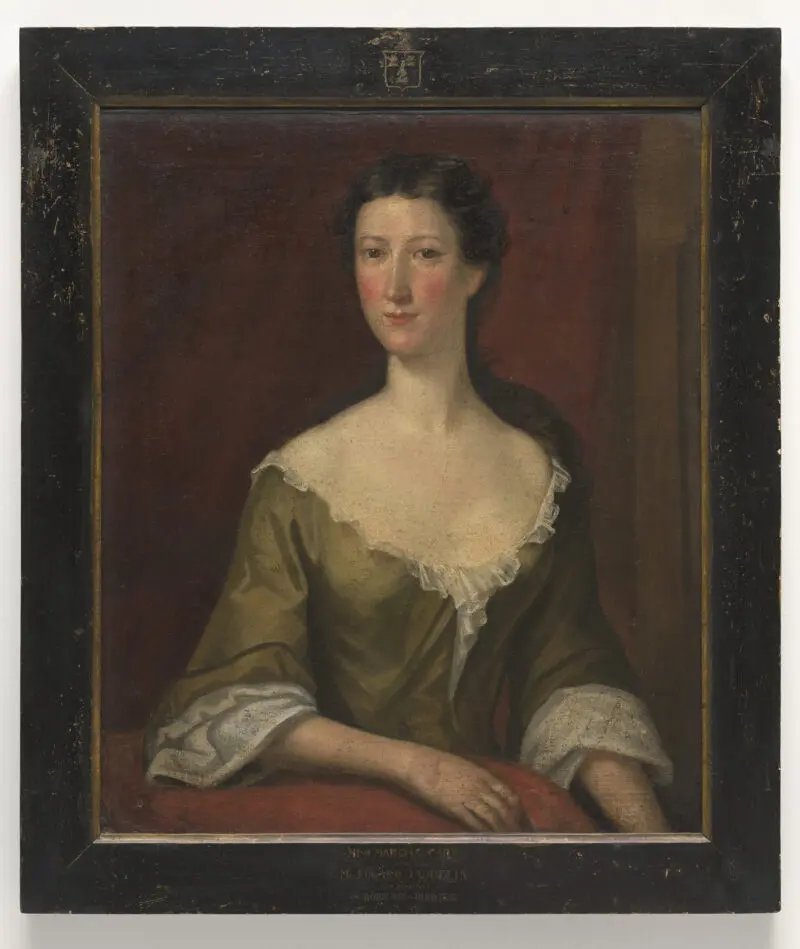
Attributed to Nehemiah Partridge (American, 1683–1730)
oil on canvas, 31½” H x 26″W
Virginia Museum of Fine Arts, Richmond. Lent by the Ambler Family, L.1.39.2
Photo: Travis Fullerton © Virginia Museum of Fine Arts
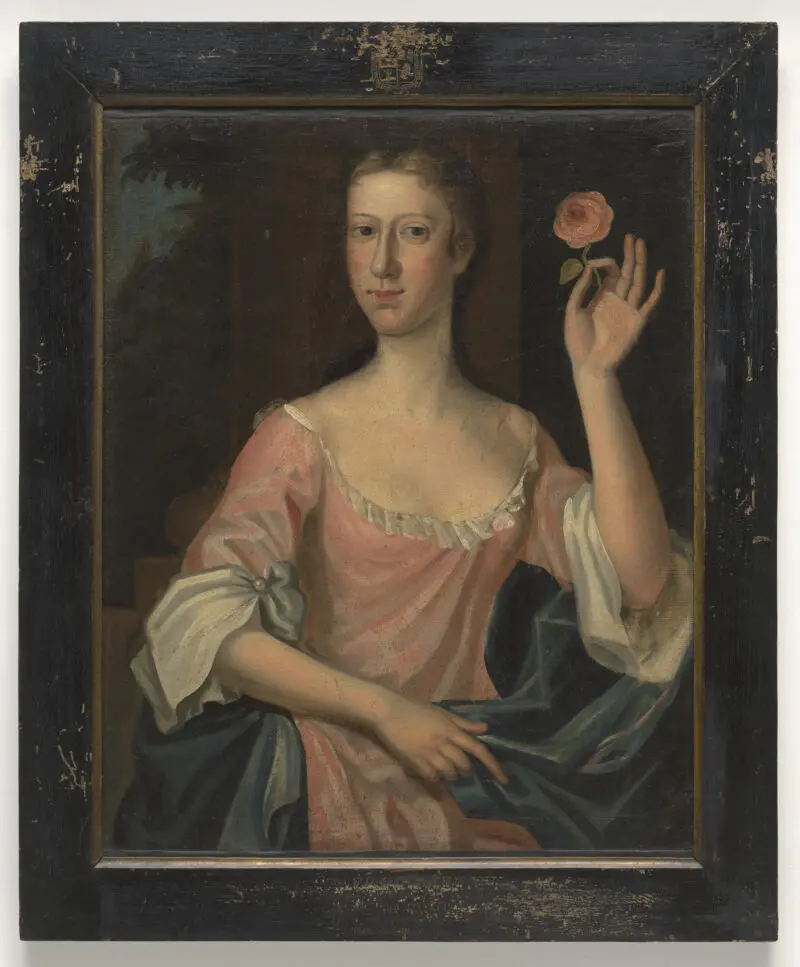
Attributed to Nehemiah Partridge (American, 1683–1730)
oil on canvas, 31½” H x 26″W
Virginia Museum of Fine Arts, Richmond. Lent by the Ambler Family, L.1.39.4
Photo: Travis Fullerton © Virginia Museum of Fine Arts
Edward and Martha’s daughter, Elizabeth (1709-1756), married Richard Ambler and their son was Jaquelin Ambler, Polly’s father. It is likely that the ring was passed to Elizabeth to Jaquelin to Polly. Jaquelin Ambler also likely held onto the family portrait collection for some time; Polly’s sister Elizabeth (Betsey or Eliza), wrote about them in her reflections on life during the Revolutionary War:
“Thus seating myself surrounded with the pictures of my venerable Great Grandfather, Mother and their numerous descendants, I proceeded to examine the Contents of the drawers that I might develope their characters. Just over the door stood my great Grandfather, Edward Jaquelin, descending immediately in a right line from one of those unfortunate banished Hugenots whose zeal in the good protestant cause has made their history remarkable, he was of French extraction, and from his [buchom?] suit and antique periwig must have arrived in this country in its early settlement.”
– Elizabeth Jacquelin Ambler Brent Carrington to Ann Ambler Fisher, 10 October 1796, in Elizabeth Jacquelin Ambler Brent Carrington Papers, Rockefeller Library, Colonial Williamsburg Foundation.
A 1961 publication by William Meade titled Old Churches, Ministers and Families of Virginia includes an unattributed quote indicating that the ring was once owned by Polly Marshall. The ring continued to be passed down through the family, as Polly’s great-great-granddaughter donated the ring to the John Marshall House in 1952, where it has remained ever since.