
Written April 2023, Updated September 2026.
Have you ever wondered how Bacon’s Castle got it’s name? Read on to find out!
PART ONE
In 1674, 27-year-old English aristocrat Nathaniel Bacon arrived in Virginia with his wife, Elizabeth. The colony the Bacons stepped into was a far cry from the original struggling town within a palisaded fort. Virginia was now an economically stable region, with wealthy landowners, a (somewhat) representative government, and a growing and diverse population. Although Nathaniel had been sent here in exile for legal fraud, he was confident that his family connection to the colony’s governor would secure his success in Virginia. However, in just a few short years, Nathaniel Bacon’s ego, ambition, and prejudice would lead the entire colony to the brink of ruin.
Despite a stable economy, many Virginians were experiencing financial hardship. Tobacco prices were down, the crop was struggling, and many small farmers were struggled to make ends meet. Just a few years before, a new law excluded these smaller landholders from participating in government. And of course, there was growing fear of attacks from neighboring Indigenous communities.
During the 1670s, English colonists had begun to push further into tribal lands, resulting in conflicts with Indigenous people (1 p.11). Virginia’s Governor William Berkeley was reluctant to get involved. At the same time, members of the Susquehannock tribe had been displaced from their homes in Pennsylvania and sought refuge in Maryland and Virginia. Contact with a new tribe was unwelcome to the English at the best of times, but conditions in 1675 were particularly volatile. Colonists in Virginia were acutely aware of King Philip’s War, a war between colonists and tribes then raging in Massachusetts.
Meanwhile, Indigenous groups were angry that Berkeley was allowing colonists to violate treaties protecting land boundaries. Land disputes, retaliatory raids, and general violence would soon boil over. Anti-Indigenous sentiment among the colonists was running high.
As colonists’ panic began to escalate, Nathaniel Bacon saw an opportunity to grab power. He characterized Berkeley as conniving and incompetent, and presented himself as the solution to the colony’s problems. Soon he was leading an army of angry colonists to attack Indigenous communities, forcing the Pamunkey to take up residence in Dragon Run swamp. The move was so strategic that Bacon’s men were unable to pursue them successfully, becoming exhausted, sick, and lost in the Dragon’s wilderness. Despite his failure at Dragon Run, Bacon had become a recognized leader for a body of colonists increasingly dissatisfied with Berkeley.
Over the ensuing months, Bacon and his army grew more and more out of hand. In June 1676, Berkeley called another session of the General Assembly. At this session, Bacon and Berkeley got into a heated argument, whereby Berkeley and many legislators felt their lives were under threat. Ultimately, under duress, the June assembly produced a 1000-man army complete with a cavalry unit (1 p.11). Bacon also extracted from the frightened Assembly a commission that named him the General of this army (1 p.11). Shortly thereafter, Berkeley declared Bacon in rebellion against the government.
Bacon was an extreme and polarizing leader. He was now in charge of roughly 2,000 men, not all of whom were supportive of his rhetoric and now clung to Berkeley’s leadership. Ultimately, the division within the colony erupted into chaos. Bacon’s men burned Jamestown, the colony’s capital. They attacked Berkeley’s supporters along with Indigenous communities (1 p. 12).
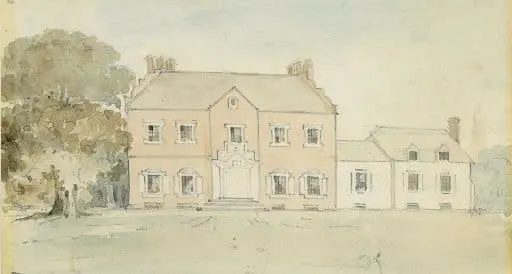
During Bacon’s Rebellion, Arthur Allen II inhabited a 5,000 square-foot brick manor house in Surry County with his mother, Alice Tucker Allen, and at least 7 servants, several of whom were enslaved. Arthur Allen was a local politician who voted against sending support to Bacon. In September 1676, Governor Berkeley and many of his supporters, including Allen, fled to the Eastern Shore to escape Bacon’s army. A group of Bacon’s men quickly seized Allen’s brick mansion.They stayed for three months, “making what havoc they pleased, both within door and without.”
In October, Nathaniel Bacon died from a combination of lice and “the bloody flux.” It’s unlikely he ever made it to Allen’s Brick House. In December, soldiers from England arrived to put out the last embers of Bacon’s Rebellion, and Arthur Allen was able to return home.
Sources and the rest of the story available in Part Two…